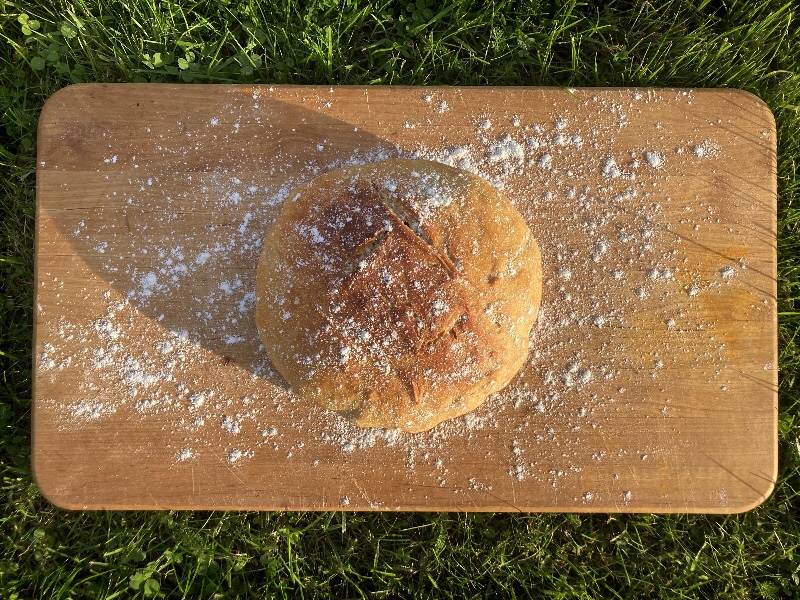
This is a return to the Dutch oven strategy, with a few changes.
The recipe was identical to the previous bread: 1 dl starter, 2 dl lukewarm water, 5 dl all-purpose flour and 1 tbsp salt.
Mix the starter, water and salt and let the salt dissolve. Then add flour, decilitre by decilitre, and mix until the dough is firm but supple, still slightly sticky, but not overly so.
The dough is then left to rise in a bowl, under a wet towel.
The quick version is to just let it rise on the counter until doubled, around 5 hours, depending on temperature. It may be slightly improved by a longer rise in the fridge overnight, maybe up to 20 hours. When the rise is done, gently flip it around on a board covered with flour to lessen the hydration slightly, shaping it into a round in the process.
Lift it into a Dutch oven with the bottom covered with flour, and leave it on the oven, covered, while the oven is heating.
Heat the oven to 225-230 °C, together with a pan. When the oven is heated, slice the top of the bread with the desired shape.
Fill the pan with hot water, then let the bread bake in the Dutch oven under lid for 20 minutes, on the lowest rung above the pan.
After 20 minutes the dough should have risen noticeably, the lid is then removed and the temperature lowered to 200-205° C.
A bake of approximately 45-50 minutes more should leave the crust golden. If there is still water in the pan, remove it after around 25 minutes.
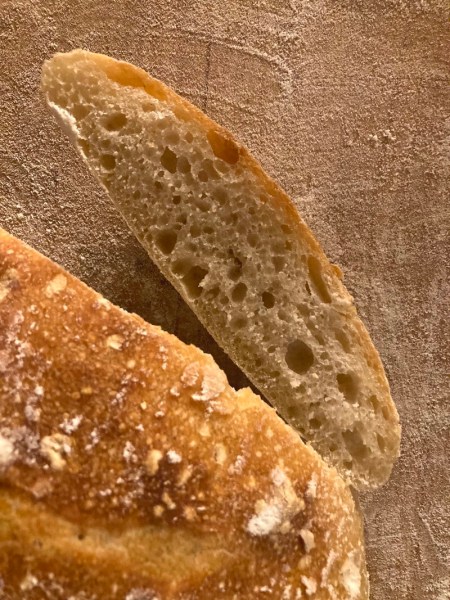
The crumb and taste is almost identical to Sourdough Bread n:o 2, with a different shape and slightly different crust. The crust is thin, yet with an appealing crunchiness.



- Asian Pork Hamburger on Rye | Recipe
- Shrimp and Avocado Salad with Lime Cilantro Dressing | Recipe
- Seared Pork Fillets with Creamy White Wine Dijon Sauce | Recipe
- Chicken Paprika | Recipe
- Goat’s Cheese Salad with Roasted Sourdough Bread | Recipe
To get free updates on the latest, enter your email and tap News.
 The Food and Booze Logs
Leave a comment